


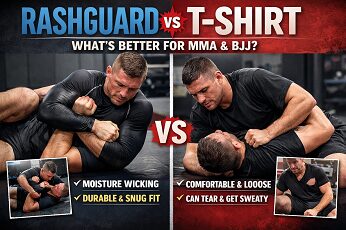
Rashguard vs T-Shirt Key Differences for MMA and BJJ
Mixed Martial Arts and Brazilian Jiu-Jitsu demand more from training apparel than most sports. Fighters perform takedowns, scrambles, submissions, guard passes, and ground control that place constant stress on clothing. The debate of rashguard vs. t-shirt MMA BJJ continues among beginners, but experienced grapplers understand that proper gear directly impacts performance, safety, and hygiene.
Training attire influences movement efficiency, grip control, endurance, and long-term skin health. Governing bodies like the International Brazilian Jiu-Jitsu Federation set standards that shape what athletes wear, especially in no-gi competition. Understanding the differences between rashguards and t-shirts helps practitioners make the right decision for training and competition.
Understanding the Needs of MMA and Brazilian Jiu-Jitsu
MMA and BJJ involve close body contact, friction against mats, and repeated explosive movements. Clothing must stretch with the body, support joint mobility, and remain intact under pressure. Fabric failure, distraction or excess material can interrupt technique execution and increase injury risk.
Hygiene is another major concern. Sweat, blood, and skin contact create conditions where bacteria like Staphylococcus aureus and fungal infections can spread rapidly. This is why many academies enforce fitted training gear policies and discourage loose cotton shirts during sparring.
What Is a Rashguard?
Definition and Purpose
A rashguard is a tight-fitting athletic top designed for grappling sports, including Brazilian Jiu-Jitsu, MMA, wrestling, and submission grappling. Originally used by surfers to prevent skin irritation, rashguards became essential in combat sports because they protect skin, improve movement, and reduce hygiene risks.
Today, a BJJ rashguard is standard equipment in no-gi BJJ and widely used in MMA gyms worldwide.
Materials Used in Rashguards
Rashguards are made from polyester spandex, and elastane blends. These materials provide four-way stretch compression and abrasion resistance. Moisture-wicking technology pulls sweat away from the skin, helping regulate body temperature during intense rounds.
Compared to standard gym wear, rashguards built for grappling feature reinforced stitching and durable fabric that withstands mat friction and constant pulling.
What Is a T-shirt or Grapple T-shirt?
Regular Cotton T-shirts
Cotton T-shirts are common among beginners because they are affordable and familiar. However, cotton absorbs sweat quickly and becomes heavy and loses shape during training. Once soaked, it restricts movement and increases friction, leading to discomfort and distraction.
Many search for cotton rashguard BJJ options, but cotton lacks the durability, moisture control, and skin protection required for grappling sports.
Grapple T-shirt Explained
A grapple t-shirt is designed specifically for combat sports training and uses more durable fabric than casual cotton shirts. While it performs better than a regular tee, it still has a looser fit compared to a rashguard.
This fuels the grapple t shirt vs rashguard debate. Grapple tees may feel comfortable,e but they still create grip points and offer less protection in high-intensity no-gi BJJ and MMA training.
Rashguard vs T Shirt Key Differences for MMA and BJJ
Performance and Mobility
Rashguards move seamlessly with the body, allowing unrestricted hip rotation, shoulder mobility, and core engagement. Their elasticity supports explosive transitions and dynamic scrambles.
T shirts become heavy when wet, cling to the body, and limit movement. This reduces efficiency during live rolling sparring and conditioning rounds.
Grip and Control in Grappling
Loose fabric provides unintended handles for opponents. In no-gi Brazilian Jiu-Jitsu, where grips rely on body control rather than collars, this is a major disadvantage.
Rashguards eliminate excess material, reducing grip opportunities and aligning with IBJJF competition standards.
Skin Protection and Safety
Rashguards protect against mat burn, scratches, and abrasions. They also act as a barrier against bacteria, reducing the risk of skin infections such as ringworm and staph.
This focus on safety is one reason why the IBJJF and many MMA gyms favor rashguards over t-shirts.
Rashguard vs Compression Shirt BJJ
Rashguards and compression shirts share similarities such as muscle support and improved blood circulation. However, BJJ rashguards are engineered specifically for grappling.
They feature flatlock seams, reinforced panels, and abrasion-resistant fabric. Standard compression shirts designed for gym workouts lack these features and wear out quickly under grappling stress.
For Brazilian Jiu Jitsu and MMA, rashguards clearly outperform generic compression shirts.
Hygiene and Sweat Management
One of the biggest advantages of rashguards is superior hygiene control. Moisture-wicking fabric pulls sweat away from the skin, allowing faster evaporation and keeping the body drier.
Cotton t-shirts trap moisture and odor, creating an environment for bacterial growth. Rashguards dry quickly, resist odor and support long-term skin health, which is critical for consistent no gi BJJ and MMA training.
Durability and Longevity
Rashguards are built for durability. High-quality models use reinforced stitching that resists tearing under pressure. The fabric stretches without losing shape even after hundreds of training sessions.
T-shirts stretch thin and tear due to constant pulling and mat friction. Over time, rashguards are more cost-effective because they last significantly longer.
Comfort During Long Training Sessions
Rashguards regulate body temperature and reduce chafing during extended sessions. Their smooth surface minimizes friction between skin and mat, preventing painful rashes.
This is why professional MMA fighters and advanced BJJ practitioners consistently choose rashguards for daily training and competition preparation.
Competition Rules and Gym Policies
The International Brazilian Jiu Jitsu Federation mandates fitted rashguards for no-gi competition and prohibits loose clothing. These rules prioritize safety, fairness, and hygiene.
Many MMA gyms and BJJ academies adopt similar policies restricting t-shirts during sparring due to injury and hygiene risks.
Style Identity and Confidence
Modern rashguards offer clean athletic designs that reflect professionalism on the mats. Wearing proper gear builds confidence and reinforces a disciplined training mindset.
As athletes progress, they often invest in reliable fightwear from trusted providers like Shapes Fightwear, focusing on function, comfort, and durability rather than unnecessary branding.
When Can a T-shirt Be Acceptable
T-shirts may be acceptable in beginner classes, low-intensity drilling, or introductory sessions where contact is limited. They can also serve as a temporary option for budget-conscious beginners.
However, as training intensity increases, t-shirts become impractical due to mobility limitations, hygiene concerns, and safety risks.
Who Should Choose a Rashguard
Rashguards are ideal for all levels, from beginners to advanced competitors. No gi BJJ athletes, MMA fighters, wrestlers, and submission grapplers all benefit from improved performance protection and hygiene.
Anyone serious about long-term progress and competition readiness should consider a rashguard essential equipment.
Final Verdict: Rashguard or T-shirt
When comparing a rashguard vs t shirt for MMA and BJJ, the answer is clear. Rashguards outperform t-shirts in mobility, durability, hygiene, comfort, and safety.
Whether evaluating grapple t-shirt vs rashguard or rashguard vs compression shirt BJJ, the specialized design of rashguards makes them the superior choice for serious MMA and Brazilian Jiu-Jitsu training.
Frequently Asked Questions
Is a rashguard required for no-gi Brazilian Jiu-Jitsu?
Yes, most no-gi BJJ competitions, including those governed by the International Brazilian Jiu-Jitsu Federation, require athletes to wear fitted rashguards. Many gyms also enforce this rule to improve hygiene, safety, and training efficiency.
Can beginners train in MMA or BJJ using a t-shirt?
Beginners can start in a t-shirt during low-intensity classes or drilling sessions. However, as training becomes more physical, rashguards are strongly recommended for better mobility, skin protection, and hygiene.
Are rashguards better than compression shirts for BJJ?
Yes, rashguards are better than standard compression shirts for BJJ because they are designed specifically for grappling. They feature reinforced stitching, abrasion-resistant fabric and a fit that reduces grip opportunities.
How many rashguards should an MMA or BJJ athlete own?
Most athletes should own at least two to three rashguards. This allows for regular washing between sessions and helps maintain hygiene, especially for those training multiple times per week.