


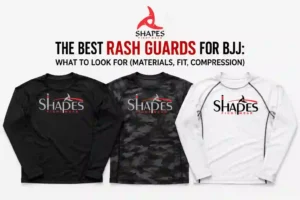
The Best Rash Guards for BJJ: What to Look For (Materials, Fit, Compression)
The best rash guards for bjj use a polyester-spandex blend around 80/20, with flatlock or sublimated seams, a compression fit, and fabric in the 200 to 260 GSM range. Look for four-way stretch, reinforced stitching, and IBJJF-legal ranked colours for competition. A rash guard should fit snug like a second skin, not loose, so it does not ride up on the mat.
What should you look for in a BJJ rash guard?
The best BJJ rash guards combine the right fabric, a compression fit, and durable seams. You are looking for a polyester-spandex blend, a snug compression cut, flatlock or sublimated seams that will not chafe, and fabric weight heavy enough to survive grappling. Sublimated graphics over screen printing, and a length that stays tucked, round out a rash guard that holds up to training. The no-gi rash guard range is built to these specifications.
A rash guard is protective gear, not just apparel. It shields skin from mat burn and from bacteria like ringworm and staph, wicks sweat, and supports the muscles, so the construction matters more than the print. The checklist below covers the features that separate a training-grade rash guard from a fashion top.
| Feature | What to look for |
| Fabric blend | Polyester-spandex, around 80/20 to 88/12 |
| Weight | 200 to 260 GSM for grappling durability |
| Stretch | Four-way stretch for full range of motion |
| Seams | Flatlock or sublimated, no raised chafing edges |
| Fit | Compression, snug, stays tucked |
| Graphics | Sublimated into the fabric, not screen-printed on top |
What material is best for a BJJ rash guard?
The best material for a BJJ rash guard is a polyester-spandex blend, typically around 80 percent polyester and 20 percent spandex, with four-way stretch. Polyester gives durability and moisture-wicking, while spandex provides the compression and stretch that let you move freely. A fabric weight of 220 to 260 GSM holds up to the friction of grappling without feeling heavy or restrictive.
Construction quality matters as much as the blend. Sublimated designs dye the graphic into the fabric so it never cracks or peels, unlike screen printing that sits on the surface and degrades. Anti-microbial finishes and reinforced flatlock seams add hygiene and durability, which is why a properly built rash guard outlasts a cheap fashion one many times over, as our comparison of a rash guard versus a t-shirt for training makes clear.
How should a BJJ rash guard fit?
A BJJ rash guard should fit snug and compressive, close to the body like a second skin, without restricting your breathing or range of motion. A correct fit stays in place during scrambles and does not bunch, ride up, or give an opponent loose fabric to grip. If you can pinch large folds of material, it is too big for grappling.
Size by the brand's chart using chest and height, and account for the compression cut, which feels tighter than everyday clothing by design. A rash guard that feels slightly tight standing still will feel right once you are moving on the mat. Length is part of fit too: a longer body hem tucks into shorts or spats and stays put.
What does compression do in a rash guard?
Compression in a rash guard supports the muscles, improves moisture-wicking, and keeps the fabric tight against the skin where it protects best. The snug fit holds the material in place so it shields against mat burn and limits skin contact that spreads bacteria, while wicking sweat away to keep you cooler. Many athletes also find compression aids circulation and reduces fatigue during long sessions.
The protective and performance benefits are the same reasons compression base layers are used across combat sports, a point our piece on the benefits of compression shirts covers in full. For BJJ specifically, the hygiene barrier against ringworm and staph is as valuable as the muscle support, given how much skin contact the sport involves.
Long sleeve vs short sleeve rash guard for BJJ?

Long sleeve and short sleeve rash guards both work for BJJ, and the choice comes down to coverage versus cooling. Long sleeves give the most skin protection against mat burn and bacteria and are favoured for no-gi competition, while short sleeves run cooler and allow more airflow for hot gyms or under a gi. Both should still be a compression fit in the same fabric, the foundation of effective no-gi training kit.
The table below weighs the two so you can match sleeve length to how and where you train.
| Sleeve length | Best for | Trade-off |
| Long sleeve | No-gi competition, maximum skin protection | Warmer in hot gyms |
| Short sleeve | Hot training halls, wear under a gi | Less forearm coverage |
| Either | Daily training | Personal preference and climate |
Are rash guards IBJJF legal for competition?
Rash guards are required for IBJJF no-gi competition and must follow specific rules: the rash guard must be at least 10 percent of the rank colour, cover the torso to the waist, and be a tight fit. For gi competition, a rash guard worn under the gi must also be tight and follow colour guidance. Knowing the rules before you buy avoids a compliant-looking top that fails inspection.
Because the rules update, confirm the current requirements before any event. The official details sit in the IBJJF uniform regulations, which set the colour, coverage, and fit standards referees check at the table. A ranked rash guard in your belt colour is the safe choice for no-gi competitors.
How do you care for a BJJ rash guard?
Care for a BJJ rash guard by washing it in cold water on a gentle cycle and hanging it to dry, ideally after every session. Cold water and air-drying protect the spandex and the sublimated print, while skipping fabric softener keeps the moisture-wicking finish working. Washing promptly also removes the sweat and bacteria that grappling gear collects.
Avoid hot water, the tumble dryer, and ironing, all of which break down the elastane and shorten the rash guard's life. Turning it inside out before washing protects the graphics. A well-cared-for rash guard keeps its compression and colour through years of training rather than stretching out in a season.
How to choose custom and team rash guards
For academies and teams, custom rash guards add identity and consistency, and the construction priorities stay the same: poly-spandex blend, compression fit, sublimated graphics, and flatlock seams. Custom sublimation lets you place an academy logo, sponsor marks, and rank colours into the fabric permanently, with a minimum order that suits a full team. Specifying GSM and fit across a roster keeps every member's kit identical.
Manufacturing in Sialkot is why the spec stays consistent across a bulk order. Shapes Fightwear forges its kit in the city that produces much of the world's combat-sports gear, so custom rash guards and no-gi sets hold the same fabric weight and fit from one production run to the next, the consistency a full academy kit needs.
Rash guards at Shapes Fightwear
Shapes Fightwear manufactures premium custom BJJ rash guards from a high-performance polyester-spandex blend with four-way stretch, flatlock stitching, and a true compression fit, available in both long- and short-sleeve styles. Designed specifically for grappling, every rash guard features durable sublimated graphics, vibrant full-color printing, and an athletic cut that stays in place during training and competition.
Whether you need a single custom rash guard or a complete team order, Shapes Fightwear offers fully customized designs with no limits on colors. Add your logos, names, sponsor branding, and custom artwork in virtually any placement to create a unique design that matches your vision. The same complete customization is available for BJJ academies, schools, clubs, and teams, ensuring consistent branding and professional-quality apparel across every size and order quantity.
Built with the same practitioner-focused approach, every rash guard is engineered for comfort, durability, and performance, making it ideal for no-gi training, competition, and academy uniforms alike.
Frequently Asked Questions
What GSM should a BJJ rash guard be?
Around 200 to 260 GSM is the sweet spot for grappling. That weight is durable enough to survive the friction of rolling without feeling heavy or restrictive. Lighter fabrics wear out and tear faster on the mat, while much heavier ones run hot and limit movement.
Do I need a long or short sleeve rash guard?
Both work. Long sleeves give the most skin protection against mat burn and bacteria and are favoured for no-gi competition. Short sleeves run cooler for hot gyms or under a gi. Choose by climate and how much coverage you want; either should be a compression fit.
Are rash guards required for no-gi BJJ?
For IBJJF no-gi competition, yes. The rash guard must be at least 10 percent of your rank colour, cover the torso to the waist, and fit tight. Always check current IBJJF rules before an event, since a compliant-looking top can still fail inspection on colour or coverage.
How tight should a BJJ rash guard fit?
Snug, like a second skin, without restricting your breathing or movement. A compression fit stays in place during scrambles and gives an opponent no loose fabric to grip. If you can pinch large folds of material, it is too big for grappling.
How do I wash a BJJ rash guard?
Wash it in cold water on a gentle cycle, turned inside out, and hang it to dry. Skip hot water, the tumble dryer, and fabric softener, all of which break down the spandex and the sublimated print. Wash promptly after training to remove sweat and bacteria.
Final Thoughts
The best BJJ rash guard is a compression-fit, polyester-spandex top in the 200 to 260 GSM range, with four-way stretch, flatlock or sublimated seams, and ranked colours if you compete. Fit it snug so it protects skin and stays put, wash it cold and hang it to dry, and it will last for years of training. Buy on fabric and fit, not on the graphic.
Ready to gear up? Browse the no-gi rash guard collection and choose the sleeve length and fit that match how you train.
 Deutsch