


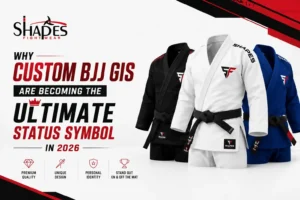
Why Custom BJJ Gis Are Becoming the Ultimate Status Symbol in 2026
Walk into any competitive Brazilian Jiu-Jitsu academy in 2026 and you'll notice something that would have seemed strange a decade ago: the mats look less like a uniform sea of white and blue, and more like a runway. Dye-sublimated panels in team colors. Embroidered belt-rank patches. Limited-edition collaboration gis that sold out in minutes. Gis with QR-coded NFC tags linking to a competitor's highlight reel.
Brazilian Jiu-Jitsu has always prized humility the gi was traditionally meant to be simple, functional, and identical for everyone regardless of rank or wealth. But that culture is shifting fast. The custom BJJ gi has quietly become one of the sport's most visible signals of status, identity, and belonging. It's no longer just about what protects you from mat burn or which weave resists grip-fighting the best. It's about what your gi says about you before you ever shake hands and bump fists.
This article breaks down exactly why custom BJJ gis have exploded in popularity, what's driving the shift, and what it means for practitioners, academies, and brands navigating this new era of the sport.
From Uniform to Identity: How the BJJ Gi Culture Changed
For most of BJJ's modern history, the gi was intentionally unremarkable. Early competitors trained and competed in plain white, blue, or occasionally black gis with minimal branding a small manufacturer patch on the chest, maybe a national federation logo. The philosophy mirrored the sport itself: rank is earned on the mat, not bought in a pro shop.
That began changing as BJJ grew from a niche martial art into a global combat sport with televised super-fights, six-figure prize purses, and millions of social media followers. As the sport professionalized, so did its visual identity. Academies started fielding competition teams that needed to look like teams matching gis with sponsor logos, just like a football jersey. Elite competitors began treating their gi as part of their personal brand, the same way a boxer treats custom-designed trunks or a UFC fighter treats their walkout gear.
By the early 2020s, custom gi programs for academies were common. By 2026, the trend has moved a significant step further: it's not just teams customizing gis for unity it's individuals customizing gis for personal expression, prestige, and recognition. The gi has become wearable proof of identity in a sport built almost entirely on earned respect.
Why "Status Symbol" Is the Right Word for 2026
Calling a piece of training gear a status symbol might sound dramatic, but the parallels to other status markets are hard to ignore. A custom BJJ gi today can function the same way a tailored suit, a limited sneaker drop, or a personalized golf bag does in other communities a visible, contextual signal that says: I take this seriously, I belong to something, and I can afford to make a statement.
1. The Sport's Explosive Mainstream Growth
BJJ participation has grown dramatically worldwide over the past several years, fueled by combat-sports crossover events, celebrity practitioners, and the rise of grappling-only promotions that stream to massive online audiences. As more people join the sport, more people are looking for ways to stand out within it and a custom gi is one of the fastest, most visible ways to do that.
When a sport goes from niche to mainstream, its gear inevitably follows a predictable arc: functional first, then tribal (team identity), then personal (individual status). BJJ has now fully entered that third phase.
2. Academies Are Building Brands, Not Just Training Rooms
Gym owners increasingly think of their academies as brands competing for students in crowded local markets. A custom Brazilian Jiu-Jitsu gi with a sharp, professional design isn't just apparel it's a walking advertisement, a recruiting tool, and a way to build team cohesion that keeps students loyal and engaged. Industry data shows a large majority of academies now use custom logos and colors specifically to strengthen team identity, and manufacturers have responded by rolling out dedicated "build your own gi" programs with low minimum order quantities so even small gyms can afford a professional custom run.
This academy-level customization has normalized the idea that your gi should look different from the gi at the gym down the street which naturally extends to individuals wanting their own gi to look different from their own training partners.
3. Manufacturing Technology Finally Caught Up
A decade ago, true customization was expensive and slow screen printing that cracked after a few washes, embroidery limited to small logos, long production timelines that made custom orders impractical for individuals. Full dye-sublimation printing and direct embroideries changed everything. It allows vibrant, full-panel graphics that are baked into the fabric rather than sitting on top of it, meaning the design survives years of washing, grappling, and grip-fighting abuse.
Combined with faster turnaround times (many custom gi programs now deliver in three to five weeks instead of three to five months) and lower minimum order requirements, it's now realistic for an individual competitor not just a team or academy to commission a fully custom, one-of-one gi. That accessibility is a major reason the trend has moved from "team branding" to "personal status symbol" so quickly.
4. Social Media Turned Gis Into Content
BJJ culture lives on Instagram, TikTok, and YouTube. Competition footage, gym life reels, and "gi review" content are massive categories within the martial arts content world. A visually striking, unique gi photographs and films dramatically better than a plain, stock design and creators and competitors know it. A custom gi isn't just gear anymore; it's a content asset that can drive followers, sponsorship interest, and recognition at tournaments where hundreds of competitors are wearing the same handful of stock colorways.
5. Limited Editions and Collaborations Create Scarcity
Nothing manufactures status faster than scarcity. Limited-run gis tied to a specific competition, a legendary black belt's signature line, or a pop-culture collaboration sell out within hours of release and routinely resell for multiples of retail price on secondary markets. Owning one signals not just taste, but timing, insider knowledge, and community standing you had to know about the drop, and you had to move fast. This mirrors exactly how sneaker culture and streetwear collaborations built their own status economies, and BJJ brands have taken clear notes.
What "Custom" Actually Means in 2026
The term "custom BJJ gi" now covers a wide spectrum, from subtle personalization to fully bespoke design. Understanding the tiers helps explain why the status signal varies so much from one custom gi to another.
Team/academy customization. The entry point matching colors, an academy logo on the chest and back panel, sometimes a sponsor patch. This is now close to standard for any serious competition team and signals belonging to a specific school or coach's lineage.
Personalized detailing. Embroidered names, belt rank stitched directly into the fabric, country flags, achievement patches for tournament placements. This layer signals individual accomplishment on top of team identity.
Full custom design. Complete creative control over the gi's colorway, patterns, and graphics via dye-sublimation, often designed collaboratively with an in-house design team. This is where individuals not just teams commission gis that exist nowhere else, turning the gi into a genuine one-of-one piece.
Limited-edition and collaboration drops. Branded partnerships between gi manufacturers and athletes, artists, or pop-culture properties, released in small, numbered runs. These function almost exactly like sneaker drops, complete with hype cycles, resale markets, and bragging rights for early buyers.
Heritage and milestone gis. Custom gis commissioned to mark a black belt promotion, a major competition win, or a retirement, designed as keepsakes as much as training gear. These carry sentimental and symbolic weight that a stock gi simply can't replicate.
Each tier represents a different kind of status. Team customization says I'm part of something serious. Full custom design says I have the resources and eye for detail to make this uniquely mine. Limited editions say I'm plugged into the culture enough to know what's dropping and move on it fast.
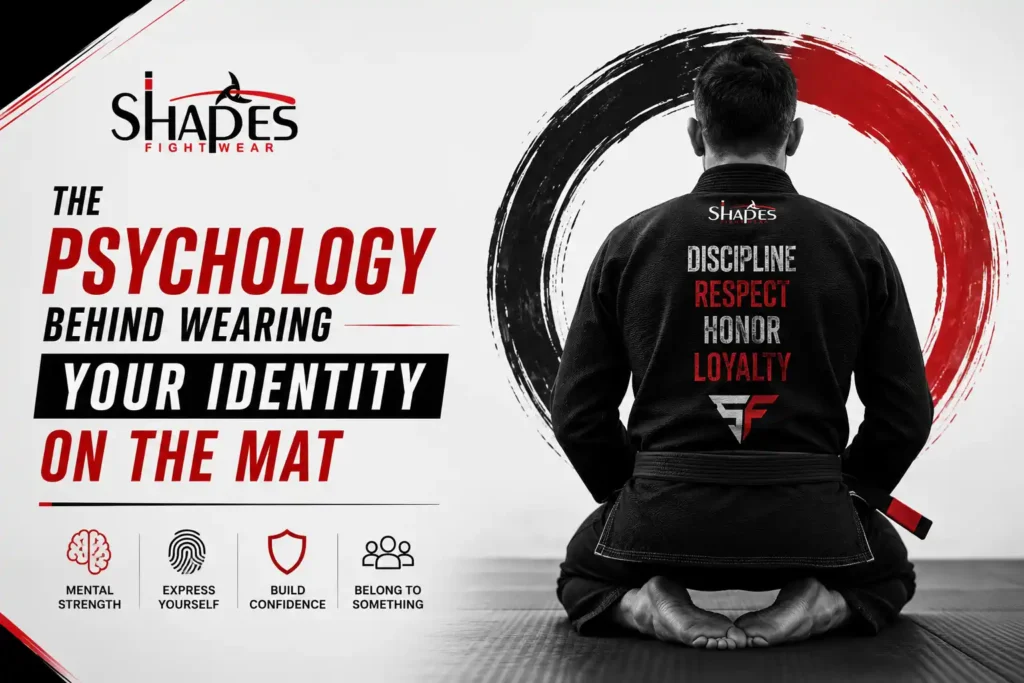
The Psychology Behind Wearing Your Identity on the Mat
BJJ is one of the few sports where practitioners of wildly different backgrounds lawyers, laborers, teenagers, grandparents train shoulder to shoulder in identical uniforms, stripped of most outward markers of status. That's part of the sport's appeal: on the mat, your belt rank is the only hierarchy that matters, earned through sweat rather than money.
Custom gis complicate that democratic ideal, and that tension is exactly what makes them such a powerful status symbol. When almost everyone is wearing the same basic uniform, small deviations carry outsized meaning. A hand-picked colorway, a rare collaboration piece, or a gi custom-built for a competitor's specific style becomes disproportionately noticeable precisely because the baseline is so uniform. In a culture built on earned respect, a distinctive gi becomes shorthand for "this person has invested financially, competitively, or both beyond the baseline."
There's also a well-documented psychological effect in combat sports: distinctive, well-fitted gear can genuinely boost a competitor's confidence and perceived presence before a match even starts. Walking onto a competition mat in a gi that's unmistakably yours, rather than one of two hundred identical stock colorways, changes how a competitor carries themselves and how opponents perceive them.
Custom Gis as Athlete Branding and Business
For sponsored competitors, coaches, and academy owners, a custom gi isn't just self-expression it's a business asset. High-level athletes increasingly treat their gi the same way a professional golfer treats their apparel deal: a canvas for sponsor logos, personal branding, and merchandise sales. Many top competitors now sell their own signature gi lines directly to fans, turning what used to be pure training equipment into a genuine revenue stream and marketing channel.
Academy owners have followed the same logic in miniature. A well-designed custom team gi, worn consistently at local and regional tournaments, functions as walking advertising that's far more memorable and far more likely to attract new students who want to be part of that visual identity than a folder of flyers ever could. Several manufacturers have built entire wholesale business lines specifically around giving academies an affordable, professional-grade blank canvas to build that identity on, offering reinforced stitching and durable fabrics designed to survive years of daily training while still looking sharp for competition photos and social content.
Sustainability Is Reshaping What "Premium" Means
Status symbols evolve with the values of the communities that create them, and BJJ culture in 2026 increasingly ties prestige to responsibility, not just exclusivity. Eco-friendly materials, recycled polyester blends, reduced-waste dyeing processes, and pre-shrunk fabrics that eliminate the need for oversized "growth room" sizing are becoming a meaningful part of premium positioning rather than a niche add-on. A growing share of academies now specifically seek out sustainable materials when commissioning custom gis, and manufacturers are marketing eco-conscious construction as a selling point alongside design customization itself.
This matters for the status conversation because it shows the custom gi trend isn't purely about vanity. Increasingly, the "best" custom gi is one that's both visually distinctive and responsibly made durable enough to last years of hard training instead of being discarded after a season, which is its own kind of status statement in a culture that still values substance over flash.
The Rise of Hybrid and Tech-Enhanced Gis
Customization in 2026 isn't limited to color and graphics. Manufacturers are experimenting with moisture-wicking smart fabrics, reinforced stress-point stitching engineered for specific grip-fighting styles, and hybrid gi/no-gi construction that blends traditional cotton-blend weaves with lighter, more breathable panels. Some competitors are even exploring gear with basic performance-tracking integration, following the broader wave of AI-driven analytics moving into combat sports training.
This technical layer adds another dimension to the status equation: a custom gi in 2026 can signal not just style, but access to cutting-edge performance gear the sporting equivalent of driving a car with the latest safety and performance tech, not just a striking paint job.
How to Approach Getting a Custom BJJ Gi
For practitioners considering their first custom order whether through an academy program or as an individual commission a few practical considerations separate a gi that ages well from one that looks great in the first month and falls apart by the sixth.
Prioritize fabric quality over graphics. A stunning dye-sublimated design on a poorly woven, thin fabric won't survive serious grip-fighting. Look for reinforced stitching at stress points (collar, cuffs, knees) and a weave weight appropriate to your training frequency and climate.
Confirm pre-shrunk construction. Gis that aren't pre-shrunk can change size dramatically after the first few washes, throwing off both fit and the accuracy of any custom sizing you paid for. Pre-shrunk fabric has become close to the industry standard for exactly this reason.
Understand the design process and timeline. Full custom dye-sublimation runs typically take several weeks, and reputable manufacturers offer a design proof before production. Rushing this step is the most common reason custom orders disappoint.
Think about minimums if ordering for a team. Academy-level custom programs increasingly offer low minimum order quantities, making it realistic for smaller gyms to get professional, unified gis without committing to hundreds of units.
Decide what the design should communicate. A gi meant to represent an academy's brand identity needs different design priorities (legibility from a distance, consistent team colors, clean logo placement) than a personal milestone gi meant to be a keepsake, or a competition gi meant to stand out on camera.
Is This Trend Good or Bad for BJJ Culture?
Not everyone in the community welcomes the shift. Traditionalists argue that BJJ's egalitarian culture where a white belt and a black belt train in visually identical gis is part of what makes the sport special, and that expensive custom gear risks turning training gear into a wealth signal that has nothing to do with skill on the mat. There's a real tension between BJJ's roots as an accessible, democratic martial art and its current trajectory toward branded, personalized, sometimes expensive gear.
At the same time, most practitioners see custom gis as additive rather than corrosive to BJJ culture a way for the sport's growing, increasingly diverse community to express individual and team identity without changing what actually determines respect on the mat: performance, technique, and time invested. A custom gi might turn heads at check-in, but it has never once helped anyone escape a tight guillotine.
What seems clear is that the trend isn't slowing down. As BJJ continues its mainstream growth, as manufacturing technology keeps lowering the barrier to true customization, and as social media keeps rewarding visually distinctive gear, custom gis are likely to become even more embedded in how the sport presents itself both to insiders and to the much larger audience now watching from outside the academy doors.
Frequently Asked Questions
1. What exactly makes a BJJ gi "custom" instead of just a stock gi?
A custom BJJ gi goes beyond off-the-shelf colorways. It can range from a team logo and matching colors, to embroidered names and belt-rank stitching, all the way to a fully dye-sublimated design created from scratch unique colors, patterns, and graphics that exist on no other gi in the world.
2. Why are custom gis considered a status symbol rather than just gear?
Because BJJ culture has historically prized uniformity everyone in the same basic white, blue, or black gi regardless of rank. In that environment, a distinctive custom gi stands out precisely because the baseline is so plain, signaling investment, taste, and standing within the community in a sport built around earned respect.
3. Are custom gis only for competitors and academies, or can individuals order one?
Individuals can absolutely order a fully custom gi. Advances in dye-sublimation printing and lower minimum order requirements have made it realistic for a single practitioner not just a team to commission a one-of-one design, which is a big part of why the trend has spread from academies to individuals.
4. How much more expensive is a custom BJJ gi compared to a standard one?
Pricing varies widely depending on the level of customization. Basic team branding (logo and matching colors) adds a modest premium over a stock gi, while full dye-sublimation designs, limited-edition collaborations, and heritage/milestone gis sit at the higher end, similar to how limited sneaker drops price well above standard releases.
5. Do custom gis perform as well as standard competition gis?
They can, provided the fabric quality and construction are prioritized alongside the design. A striking graphic printed on a thin, poorly stitched weave won't hold up to serious grip-fighting. Look for reinforced stitching at stress points and pre-shrunk, competition-grade fabric regardless of how customized the design is.
6. What's the typical turnaround time for a custom gi order?
Most reputable manufacturers deliver full custom dye-sublimation runs in roughly three to five weeks, including a design proof stage before production begins. Rushing past the proof stage is the most common reason custom orders don't turn out as expected.
7. Is a pre-shrunk custom gi worth prioritizing?
Yes. Pre-shrunk construction locks in sizing so the gi doesn't change dramatically after the first few washes which matters even more with a custom gi, since inconsistent shrinkage can throw off a design that was tailored to specific proportions.
8. Do academies need a large team to justify a custom gi program?
Not anymore. Many custom gi manufacturers now offer low minimum order quantities specifically so smaller gyms can get professional, unified team gis without committing to hundreds of units, which has helped push academy-level customization from a big-team luxury into a mainstream option.
9. Will the custom BJJ gi trend keep growing, or is it a passing fad?
All signs point to continued growth. Rising sport-wide participation, cheaper and faster customization technology, and social media's reward for visually distinctive gear are all structural trends rather than short-term fads, suggesting custom gis will keep becoming more common, not less.
Final Thoughts
The custom BJJ gi's rise to status-symbol territory isn't an accident or a passing fad it's the natural result of a sport that's grown up. As Brazilian Jiu-Jitsu has moved from underground martial art to global combat sport with real commercial weight behind it, its gear has followed the same path every mainstream sport's equipment eventually takes: from purely functional, to team identity, to personal expression and prestige.
Whether it's an academy building a professional brand through matching team gis, an individual competitor commissioning a one-of-one dye-sublimated design, or a collector chasing a limited-edition collaboration drop before it sells out, the custom BJJ gi in 2026 has become something the sport's earliest practitioners probably never imagined: a genuine, visible marker of status within one of the most humility-driven combat sports in the world. The mat may still be the great equalizer but increasingly, what you're wearing to get there says just as much as what you can do once you arrive.